

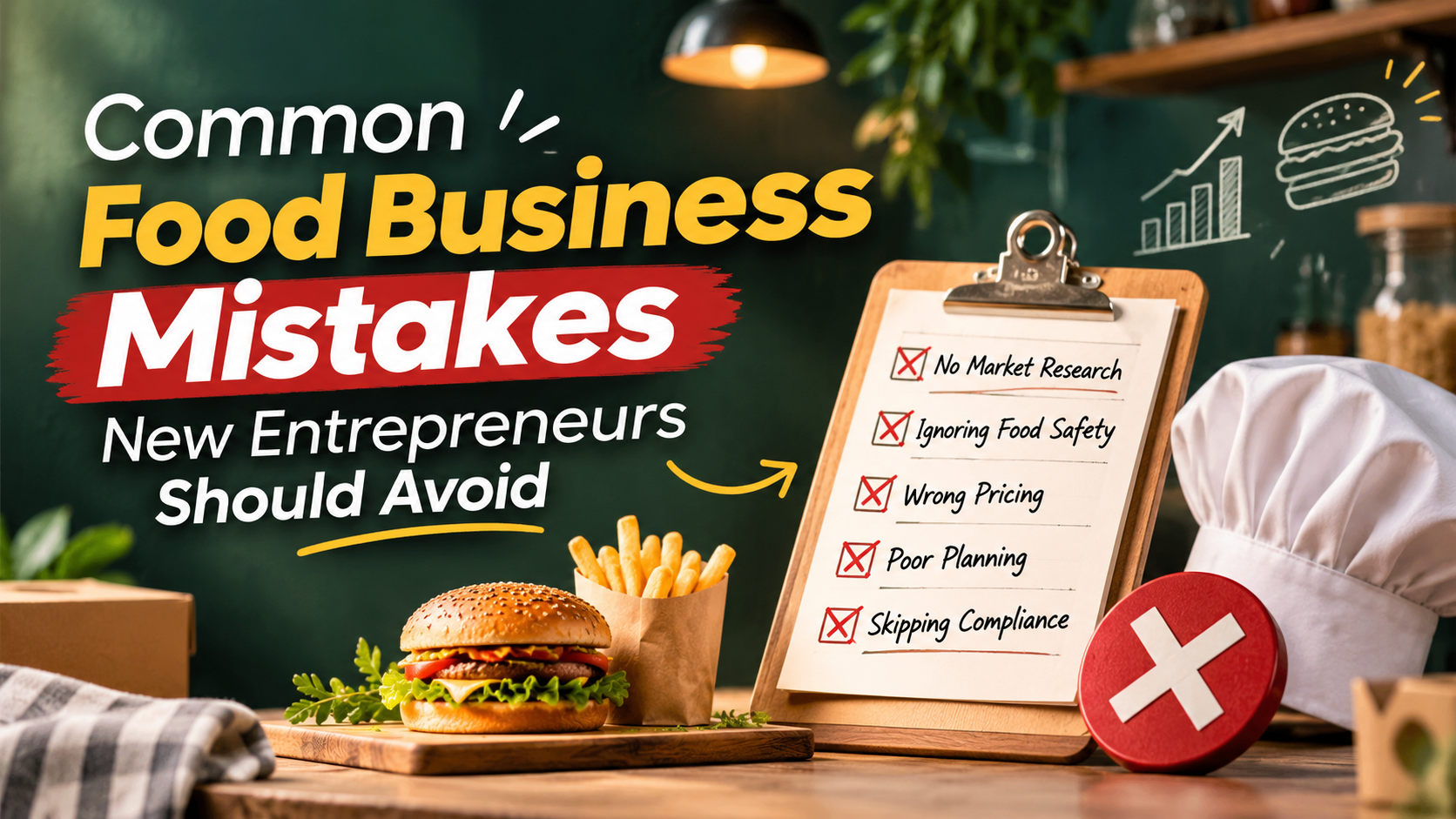
Starting a food business is an exciting journey for many. But passion alone cannot keep your doors open. Every year, new owners jump into the food industry with grand ideas, only to close down because of simple mistakes. Avoiding early errors is vital for a startup. Here are the top mistakes to dodge for long-term success.
Not Researching the Local Market Properly

A lot of new owners build their menu around what they love to eat, rather than what the neighborhood actually wants to buy. If you try to push expensive health items in a busy college zone where students want fast and cheap meals, your food business will definitely struggle.
To prevent this, use the “100-Person Survey Rule.” Before you buy a single piece of equipment, print a short paper survey. Ask 100 people in your target area these exact five questions:
- What is your go-to everyday meal or snack?
- What is the absolute maximum amount you usually spend on a single meal?
- What specific type of food is currently missing in this local area?
- Do you prefer eating in, taking away, or getting home delivery?
- How many times do you eat out every week?
Getting direct answers from 100 locals paints a very clear picture of what the market truly demands.
Ignoring Food Safety and Legal Rules in India

Running your food business without the right paperwork is the quickest route to forced closure. In India, food safety rules are strictly enforced. Ignorance of the law is never accepted as an excuse. Every single operator must get a 14-digit registration number from the national food safety authority before selling any items.
Based on the updated rules from April 1, 2026, the limits are:
- Basic Registration: Needed for an annual turnover up to ₹1.5 Crore.
- State License: Needed for an annual turnover between ₹1.5 Crore and ₹50 Crore.
- Central License: Needed for an annual turnover above ₹50 Crore. You also need this for multi-state operations, import or export, or e-commerce models, even if your sales are lower.
These licenses now carry perpetual validity as long as you follow the rules, so you do not have to worry about fixed renewals. You must print this exact 14-digit number on every product package and customer bill.
Beyond food safety, a startup must secure these key local registrations:
- GST Registration: Generally needed if your goods turnover crosses ₹40 Lakh, though limits can be lower in some states.
- Shop and Establishment Act: A required state-level registration for your commercial space.
- Trade License: You must get this from your local municipal corporation.
- Fire NOC: Required from the fire department if you run a commercial kitchen.
- Local Rules: If you operate a home kitchen or street stall, always check with the local municipality for extra neighborhood regulations.
Underestimating Costs and Pricing Wrong
Guessing your prices or just copying the cafe next door is a terrible way to run a food business. You have to calculate your exact Cost of Goods Sold. A healthy startup should aim to keep its food costs between 28 percent and 35 percent of the final selling price. This exact number changes based on what you sell. A basic South Indian meal might cost less to make, while premium health snacks sit closer to the higher end.
Use this specific formula to find your selling price: (Total Cost of Ingredients / Target Food Cost Percentage) x 100 = Selling Price
For instance, if a pack of cookies costs exactly ₹30 in ingredients, and you want a 30 percent food cost: (30 / 30) x 100 = ₹100 selling price.
Standard Pricing Breakdown Table:
| Cost Category | Target Percentage of Total Revenue |
| Food and Ingredients | 28% to 35% |
| Labor and Staff Wages | 20% to 25% |
| Rent and Utility Bills | 10% to 15% |
| Net Profit Margin | 15% to 20% |
Poor Location Choice for the Business
A beautiful shop tucked away on a dead street will not generate sales. Rent might be very cheap in a quiet lane, but you will end up spending double that amount on marketing just to get people to walk in.
Before you sign any lease, do a strict “Footfall Count.” Stand directly outside the potential spot for exactly one hour during peak lunch (1:00 PM to 2:00 PM) and peak evening hours (7:00 PM to 8:00 PM) on a Tuesday and a Saturday. Count every single person who walks past the door. If the count is strictly under 50 people per hour, the location lacks the natural foot traffic needed to support a profitable venture without huge ad spending.
Not Focusing on Hygiene and Cleanliness
Customers might overlook a slow waiter once, but they will never come back if they see a dirty kitchen. Cleanliness must be a strict daily habit in the food industry, not something you do only when you have free time.
Use the standard 3-Sink Wash Method for all kitchen utensils:
- Wash: Use warm water and liquid dish soap at exactly 43 degrees Celsius to scrub away all food bits.
- Rinse: Use plain hot water to wash the soap off completely.
- Sanitize: Soak the items in room-temperature water mixed with 50 to 100 parts per million of food-safe liquid chlorine. Leave them submerged for 30 to 60 seconds, following the product label closely. Use commercial test strips to check the exact chlorine level, and strictly follow local sanitation guidelines before letting things air dry.
Overlooking Competition in the Area
Thinking you have no competition is a very risky mindset. Even if your recipes and ideas are totally unique, customers only have so much money to spend on eating out every month.
To beat your rivals, do a “Top 3 Competitor Audit.” Pick the three closest places within a 2-kilometer radius that want the same customers as you. Visit them quietly and note down these three exact details:
- The name and exact price of their best-selling dish.
- The exact time it takes from giving the order to getting the food.
- The exact greeting their staff uses when people walk in.
Find their weak spot. If they have slow service or terrible packaging, turn that into your biggest marketing advantage.
Weak Branding and Marketing Strategy
Just putting up a big board and hoping people will buy your items does not work anymore. You need a clear visual message that shows people exactly what you are selling.
Set aside exactly 5 percent to 7 percent of your monthly gross revenue just for local marketing. Do not just post random photos online. Use a sharp, measurable plan to make your food business stand out:
- Run a clear “Buy One Get One Free” offer for exactly the first 14 days of opening to get people to try your food quickly.
- Print 1,000 thick flyers and hand them out to apartment buildings strictly within a 1-kilometer circle.
- Pay for local online video ads that are restricted exactly to the three pin codes touching your shop.
Not Managing Inventory and Waste Well
Throwing away food means throwing away cash. If you toss out expired ingredients, it eats right into your margin, making it hard to stay profitable.
You must train your staff to strictly follow the First-In, First-Out method. Whenever you get a new delivery of raw materials, place the fresh stock at the very back of the shelf. Pull all the older boxes to the absolute front so they get used first.
Also, make it a strict rule for your kitchen staff to weigh the daily waste. Keep a dedicated notebook and write down exactly how many grams of food end up in the bin every single night.
Skipping a Solid Business Plan
Many beginners rush in without figuring out their break-even point. You do not need a massive document, but a food business needs a clear, one-page plan to guide daily choices.
Essential Elements of a 1-Page Business Plan:
| Section | Exact Details to Include |
| Concept | Exactly what specific things you are selling and to whom. |
| Capital | Total exact funds resting in the bank and where they came from. |
| Break-Even | The exact number of daily sales needed to clear all bills. |
| Timeline | Exact dates for locking the menu, getting licenses, and launching. |
Having this on paper makes the whole process very easy to track.
Neglecting Customer Feedback and Reviews
Ignoring early feedback is a huge error. First impressions matter a lot in the food industry, and unhappy diners will complain to their friends before they ever complain to you.
Set yourself up with a “24-hour reply rule”. Whatever the customer says, positive or negative – you need to respond to reviews online within exactly 24 hours.
Offline, you could even put a little QR code on your receipt when they finish their order, which will take them straight to a quick feedback form. All you need to ask them are 2 questions – How was the food out of 10? What exact one thing can we do better?
You then offer them a flat 10 percent discount on their next visit. It’s an awesome way to encourage people to leave feedback & create loyalty!
Using Low-Quality Ingredients to Cut Costs
When cash is running low, buying cheaper supplies feels tempting. But altering your core ingredients will push your loyal customers away instantly. If you built a reputation for selling a premium product, and then you switch to cheap oils to save a little money, the taste will change completely.
Instead of dropping the quality of your raw materials, try reducing your portion size by exactly 5 percent to 10 percent, or raise your final menu price by ₹5. Never mess with the core quality that made your food business profitable and popular in the first place. Good ideas only work if the execution remains top-notch.
Conclusion
Running a successful food business takes a lot of hard work and dedication to learn how to be disciplined with your money. You will have to do some research on your local market, follow certain rules, manage expenses, etc.
And most importantly, don’t make these mistakes we listed above.
It’s definitely not an easy task. But by doing everything correctly, you are making sure that you will survive at least for the 1st year, and then develop your product into a lasting brand.
Stop making easily avoidable startup mistakes. Learn proven, real-world strategies to build a highly profitable business directly from an experienced entrepreneur. Skip the guesswork and accelerate your growth today. Learn with Ravi Somani.